

- List of countries by system of government
-
This is a list of the countries categorised by system of government.
Contents
- 1 Alphabetical list of countries
- 2 Map
- 3 Systems of Governance
- 4 Systems of Internal Governance
- 5 European Union
- 6 Notes
- 7 See also
- 8 External links
Alphabetical list of countries
Name Constitutional form Head of state Basis of executive legitimacy  Afghanistan
Republic Executive Presidency is independent of legislature  Albania
Republic Ceremonial Ministry is subject to parliamentary confidence  Algeria
Republic Executive Presidency independent of legislature; ministry subject to parliamentary confidence  Andorra
Constitutional monarchy Ceremonial Ministry is subject to parliamentary confidence  Angola
Republic Executive Presidency is independent of legislature  Antigua and Barbuda
Constitutional monarchy Ceremonial Ministry is subject to parliamentary confidence  Argentina
Republic Executive Presidency is independent of legislature  Armenia
Republic Executive Presidency is independent of legislature  Australia
Constitutional monarchy Ceremonial Ministry is subject to parliamentary confidence  Austria
Republic Ceremonial Ministry is subject to parliamentary confidence  Azerbaijan
Republic Executive Presidency is independent of legislature  The Bahamas
Constitutional monarchy Ceremonial Ministry is subject to parliamentary confidence  Bahrain
Constitutional monarchy Executive Monarch personally exercises power in concert with other institutions  Bangladesh
Republic Ceremonial Ministry is subject to parliamentary confidence  Barbados
Constitutional monarchy Ceremonial Ministry is subject to parliamentary confidence  Belarus
Republic Executive Presidency is independent of legislature  Belgium
Constitutional monarchy Ceremonial Ministry is subject to parliamentary confidence  Belize
Constitutional monarchy Ceremonial Ministry is subject to parliamentary confidence  Benin
BeninRepublic Executive Presidency is independent of legislature  Bhutan
Constitutional monarchy Executive Monarch personally exercises power in concert with other institutions  Bolivia
Republic Executive Presidency is independent of legislature  Bosnia and Herzegovina
Republic Ceremonial Ministry is subject to parliamentary confidence  Botswana
Republic Executive Presidency and ministry are subject to parliamentary confidence  Brazil
Republic Executive Presidency is independent of legislature  Brunei
Absolute monarchy Executive All authority vested in absolute monarch  Bulgaria
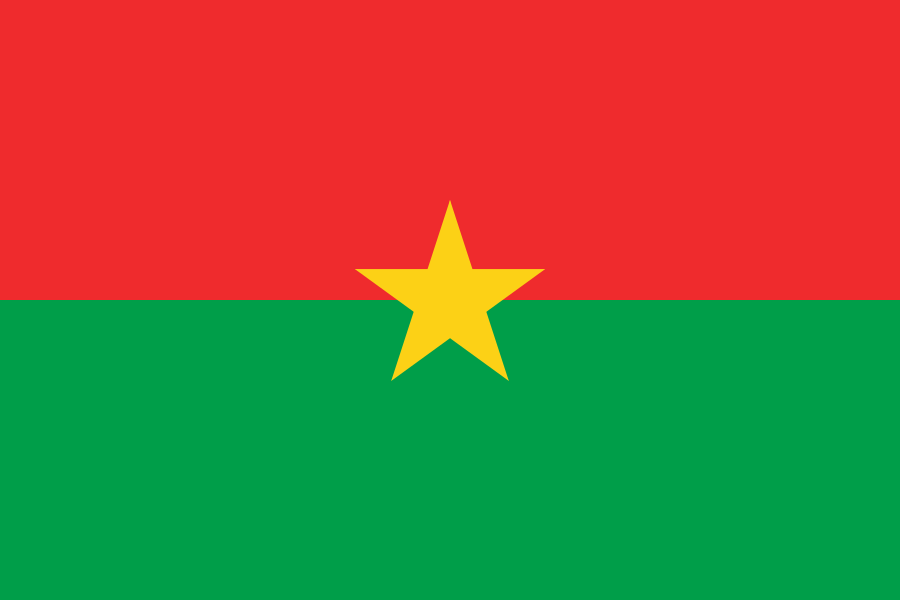
Republic Ceremonial Ministry is subject to parliamentary confidence  Burkina Faso
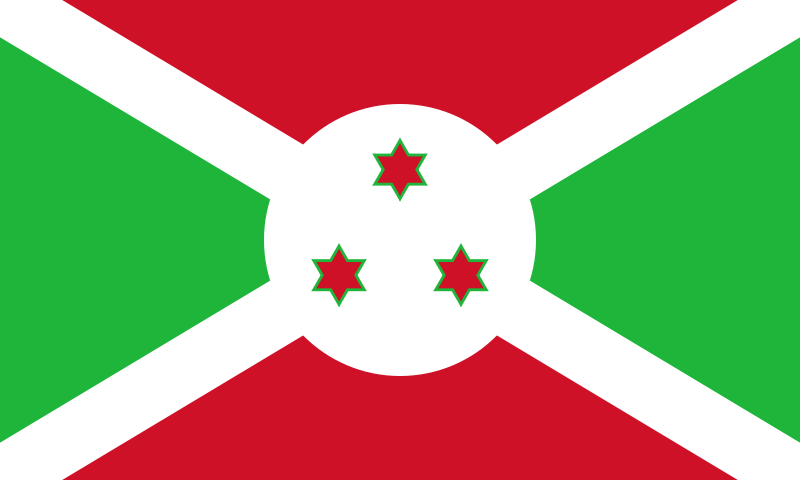
Republic Executive Presidency independent of legislature; ministry subject to parliamentary confidence  Burundi
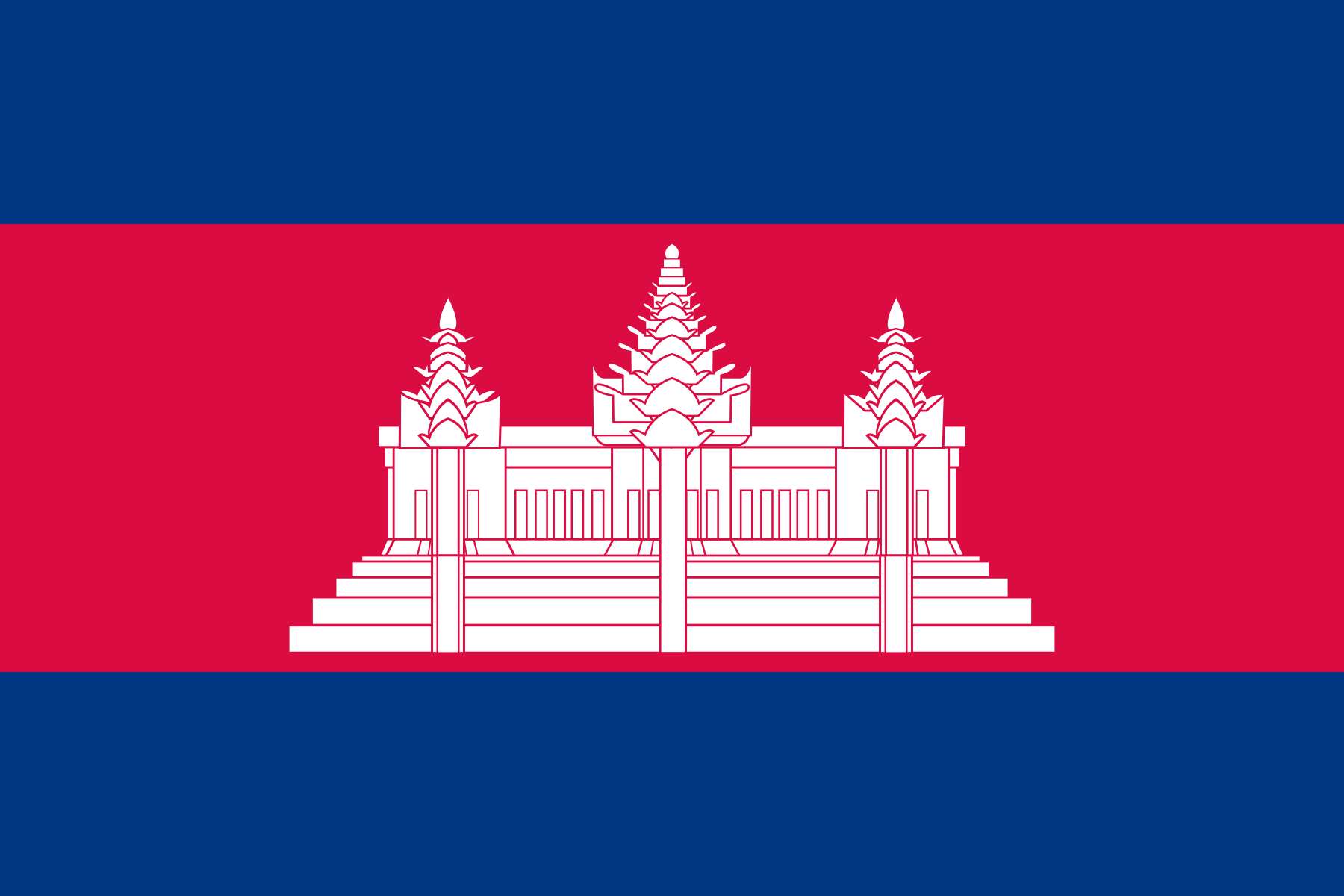
Republic Executive Presidency is independent of legislature  Cambodia
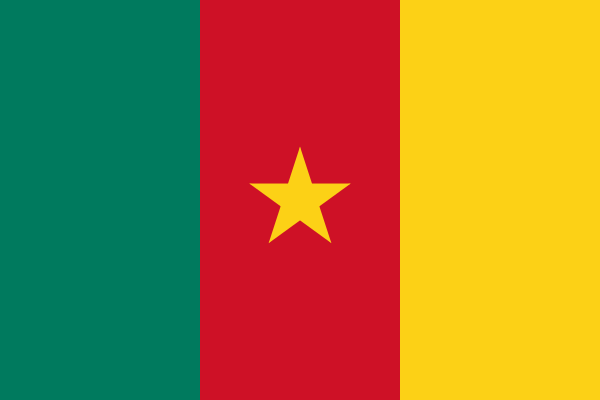
Constitutional monarchy Ceremonial Ministry is subject to parliamentary confidence  Cameroon
Republic Executive Presidency is independent of legislature  Canada
Constitutional monarchy Ceremonial Ministry is subject to parliamentary confidence  Cape Verde
Republic Ceremonial Ministry is subject to parliamentary confidence  Central African Republic
Republic Executive Presidency is independent of legislature  Chad
ChadRepublic Executive Presidency is independent of legislature  Chile
ChileRepublic Executive Presidency is independent of legislature  Colombia
Republic Executive Presidency is independent of legislature  Comoros
Republic Executive Presidency is independent of legislature  Costa Rica
Republic Executive Presidency is independent of legislature  Côte d'Ivoire
Republic Executive Presidency independent of legislature; ministry subject to parliamentary confidence  Croatia
Republic Ceremonial Ministry is subject to parliamentary confidence  Cuba
CubaRepublic Executive Power constitutionally linked to a single political movement  Cyprus
Republic Executive Presidency is independent of legislature  Czech Republic
Republic Ceremonial Ministry is subject to parliamentary confidence  Democratic Republic of the Congo
Republic Executive Presidency independent of legislature; ministry subject to parliamentary confidence  Denmark
Constitutional monarchy Ceremonial Ministry is subject to parliamentary confidence  Djibouti
Republic Executive Presidency independent of legislature; ministry subject to parliamentary confidence  Dominica
Republic Ceremonial Ministry is subject to parliamentary confidence  Dominican Republic
Republic Executive Presidency is independent of legislature  East Timor
Republic Ceremonial Ministry is subject to parliamentary confidence  Ecuador
Republic Executive Presidency is independent of legislature  Egypt
Egyptn/a n/a n/a No constitutionally-defined basis to current regime  El Salvador
Republic Executive Presidency is independent of legislature  Equatorial Guinea
Republic Executive Presidency is independent of legislature  Eritrea
Republic Executive Power constitutionally linked to a single political movement  Estonia
Republic Ceremonial Ministry is subject to parliamentary confidence  Ethiopia
Republic Ceremonial Ministry is subject to parliamentary confidence  Fiji
Fijin/a n/a n/a No constitutionally-defined basis to current regime  Finland
Republic Ceremonial Ministry is subject to parliamentary confidence  France
Republic Executive Presidency independent of legislature; ministry subject to parliamentary confidence  Gabon
GabonRepublic Executive Presidency is independent of legislature  The Gambia
Republic Executive Presidency is independent of legislature  Georgia
Republic Executive Presidency independent of legislature; ministry subject to parliamentary confidence  Germany
Republic Ceremonial Ministry is subject to parliamentary confidence  Ghana
GhanaRepublic Executive Presidency is independent of legislature  Greece
Republic Ceremonial Ministry is subject to parliamentary confidence  Grenada
Constitutional monarchy Ceremonial Ministry is subject to parliamentary confidence  Guatemala
Republic Executive Presidency is independent of legislature  Guinea
Republic Executive Presidency is independent of legislature  Guinea-Bissau
Republic Executive Presidency independent of legislature; ministry subject to parliamentary confidence  Guyana
Republic Executive Presidency independent of legislature; ministry subject to parliamentary confidence  Haiti
HaitiRepublic Executive Presidency independent of legislature; ministry subject to parliamentary confidence  Honduras
Republic Executive Presidency is independent of legislature  Hungary
Republic Ceremonial Ministry is subject to parliamentary confidence  Iceland
Republic Ceremonial Ministry is subject to parliamentary confidence  India
IndiaRepublic Ceremonial Ministry is subject to parliamentary confidence  Indonesia
Republic Executive Presidency is independent of legislature  Iran
IranRepublic Executive Presidency is independent of legislature  Iraq
IraqRepublic Ceremonial Ministry is subject to parliamentary confidence  Ireland
Republic Ceremonial Ministry is subject to parliamentary confidence  Israel
Republic Ceremonial Ministry is subject to parliamentary confidence  Italy
ItalyRepublic Ceremonial Ministry is subject to parliamentary confidence  Jamaica
Constitutional monarchy Ceremonial Ministry is subject to parliamentary confidence  Japan
JapanConstitutional monarchy Ceremonial Ministry is subject to parliamentary confidence  Jordan
Constitutional monarchy Executive Monarch personally exercises power in concert with other institutions  Kazakhstan
Republic Executive Presidency is independent of legislature  Kenya
KenyaRepublic Executive Presidency independent of legislature; ministry subject to parliamentary confidence  Kiribati
Republic Executive Presidency is independent of legislature  Kuwait
Constitutional monarchy Executive Monarch personally exercises power in concert with other institutions  Kyrgyzstan
Republic Executive Presidency independent of legislature; ministry subject to parliamentary confidence  Laos
LaosRepublic Executive Power constitutionally linked to a single political movement  Latvia
Republic Ceremonial Ministry is subject to parliamentary confidence  Lebanon
Republic Ceremonial Ministry is subject to parliamentary confidence  Lesotho
Constitutional monarchy Ceremonial Ministry is subject to parliamentary confidence  Liberia
Republic Executive Presidency is independent of legislature  Libya
Libyan/a n/a n/a No constitutionally-defined basis to current regime  Liechtenstein
Constitutional monarchy Executive Monarch personally exercises power in concert with other institutions  Lithuania
Republic Executive Presidency independent of legislature; ministry subject to parliamentary confidence  Luxembourg
Constitutional monarchy Ceremonial Ministry is subject to parliamentary confidence  Macedonia
Republic Ceremonial Ministry is subject to parliamentary confidence  Madagascar
Republic Executive Presidency independent of legislature; ministry subject to parliamentary confidence  Malawi
Republic Executive Presidency is independent of legislature  Malaysia
Constitutional monarchy Ceremonial Ministry is subject to parliamentary confidence  Maldives
Republic Executive Presidency is independent of legislature  Mali
MaliRepublic Executive Presidency independent of legislature; ministry subject to parliamentary confidence  Malta
MaltaRepublic Ceremonial Ministry is subject to parliamentary confidence  Marshall Islands
Republic Executive Presidency and ministry are subject to parliamentary confidence  Mauritania
Republic Executive Presidency independent of legislature; ministry subject to parliamentary confidence  Mauritius
Republic Ceremonial Ministry is subject to parliamentary confidence  Mexico
Republic Executive Presidency is independent of legislature  FSM
FSMRepublic Executive Presidency and ministry are subject to parliamentary confidence  Moldova
Republic Ceremonial Ministry is subject to parliamentary confidence  Monaco
Constitutional monarchy Executive Monarch personally exercises power in concert with other institutions  Mongolia
Republic Executive Presidency independent of legislature; ministry subject to parliamentary confidence  Montenegro
Republic Ceremonial Ministry is subject to parliamentary confidence  Morocco
Constitutional monarchy Executive Monarch personally exercises power in concert with other institutions  Mozambique
Republic Executive Presidency is independent of legislature  Myanmar
Republic Executive Presidency is independent of legislature  Namibia
Republic Executive Presidency is independent of legislature  Nauru
NauruRepublic Executive Presidency and ministry are subject to parliamentary confidence  Nepal
NepalRepublic Ceremonial Ministry is subject to parliamentary confidence  Netherlands
Constitutional monarchy Ceremonial Ministry is subject to parliamentary confidence  New Zealand
Constitutional monarchy Ceremonial Ministry is subject to parliamentary confidence  Nicaragua
Republic Executive Presidency is independent of legislature  Niger
NigerRepublic Executive Presidency independent of legislature; ministry subject to parliamentary confidence  Nigeria
Republic Executive Presidency is independent of legislature  North Korea
Republic Executive Power constitutionally linked to a single political movement  Norway
Constitutional monarchy Ceremonial Ministry is subject to parliamentary confidence  Oman
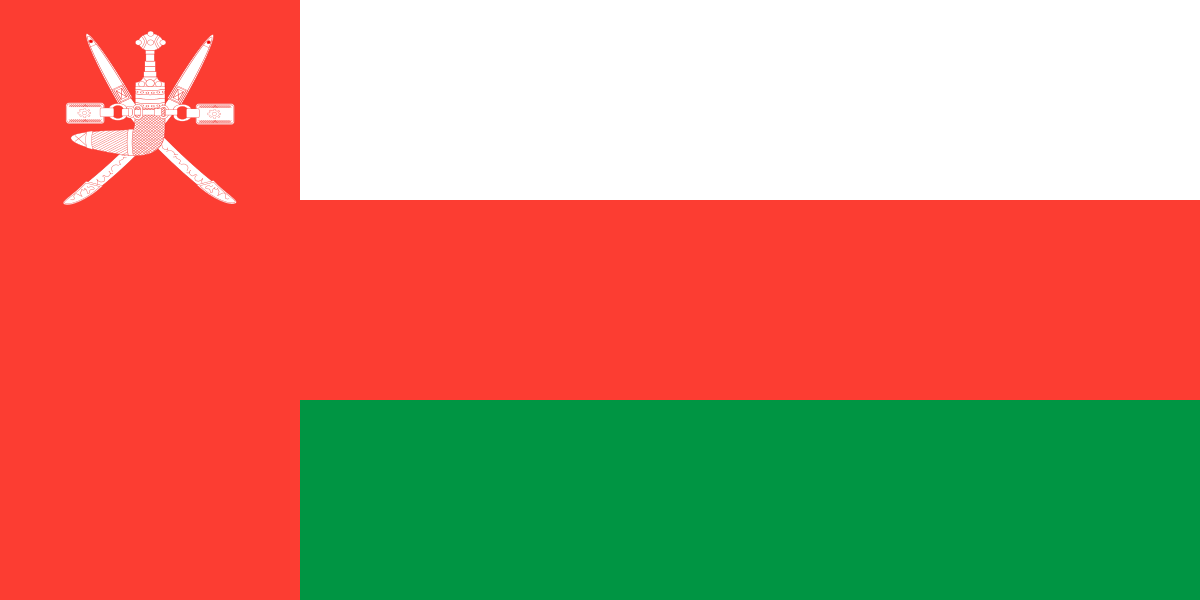
OmanAbsolute monarchy Executive All authority vested in absolute monarch  Pakistan
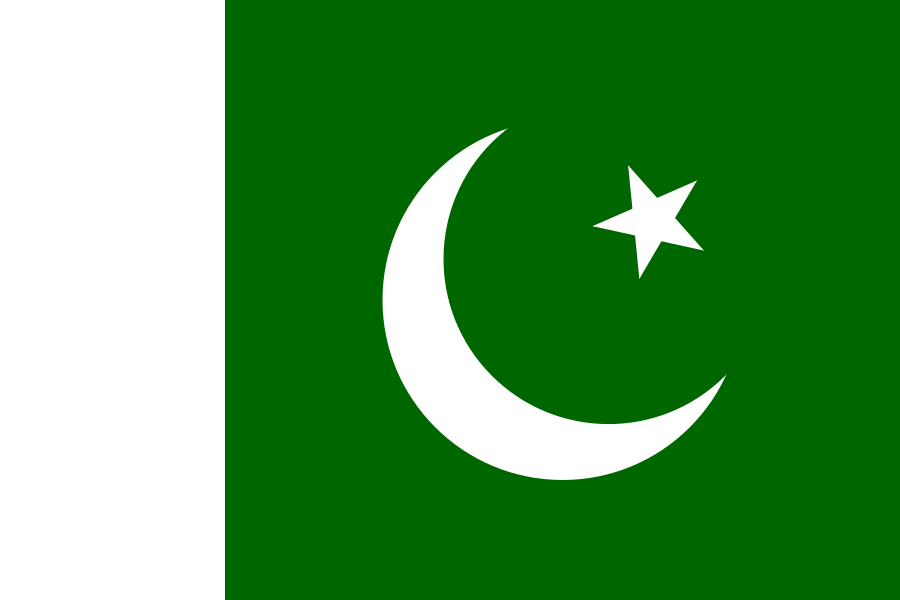
Republic Ceremonial Ministry is subject to parliamentary confidence  Palau
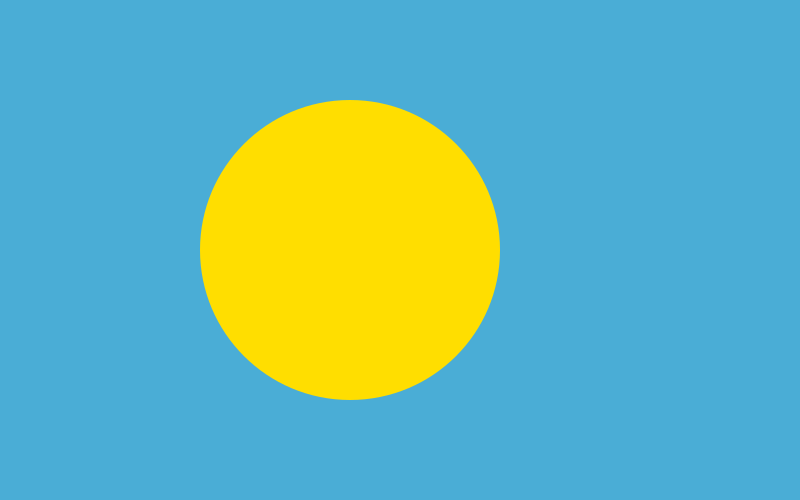
PalauRepublic Executive Presidency is independent of legislature  Palestine
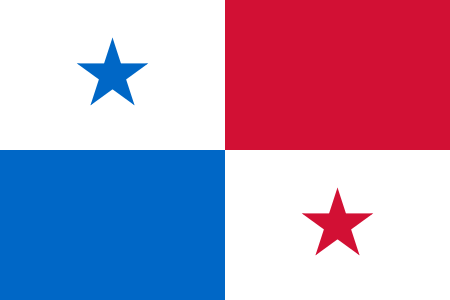
Republic Executive Presidency independent of legislature; ministry subject to parliamentary confidence  Panama
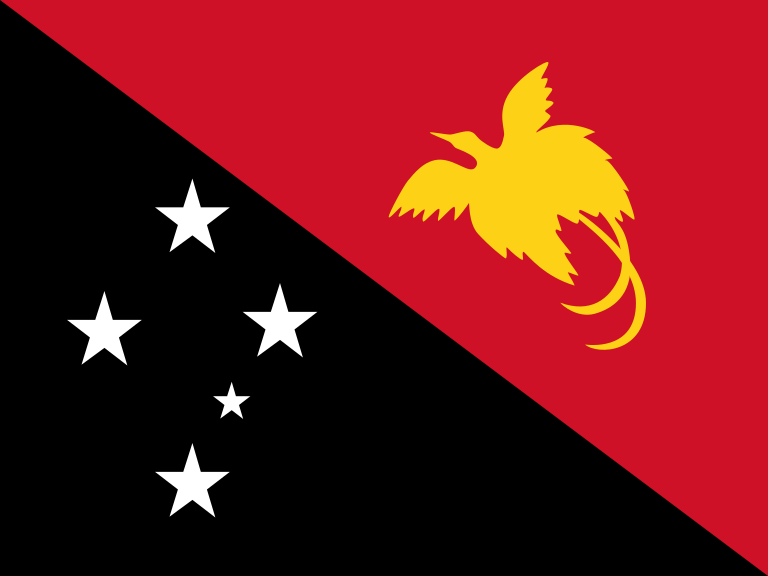
Republic Executive Presidency is independent of legislature  Papua New Guinea
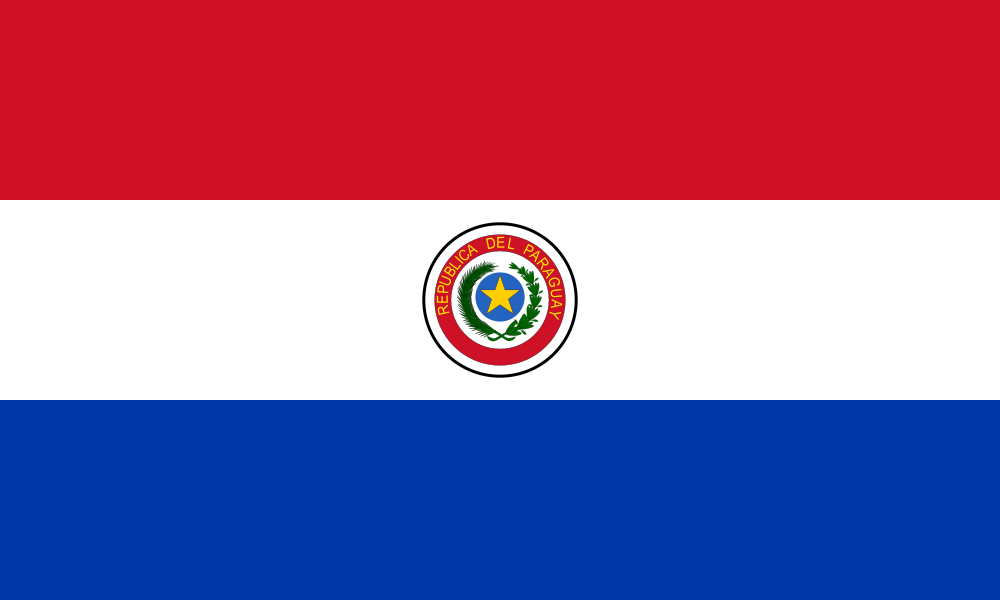
Constitutional monarchy Ceremonial Ministry is subject to parliamentary confidence  Paraguay
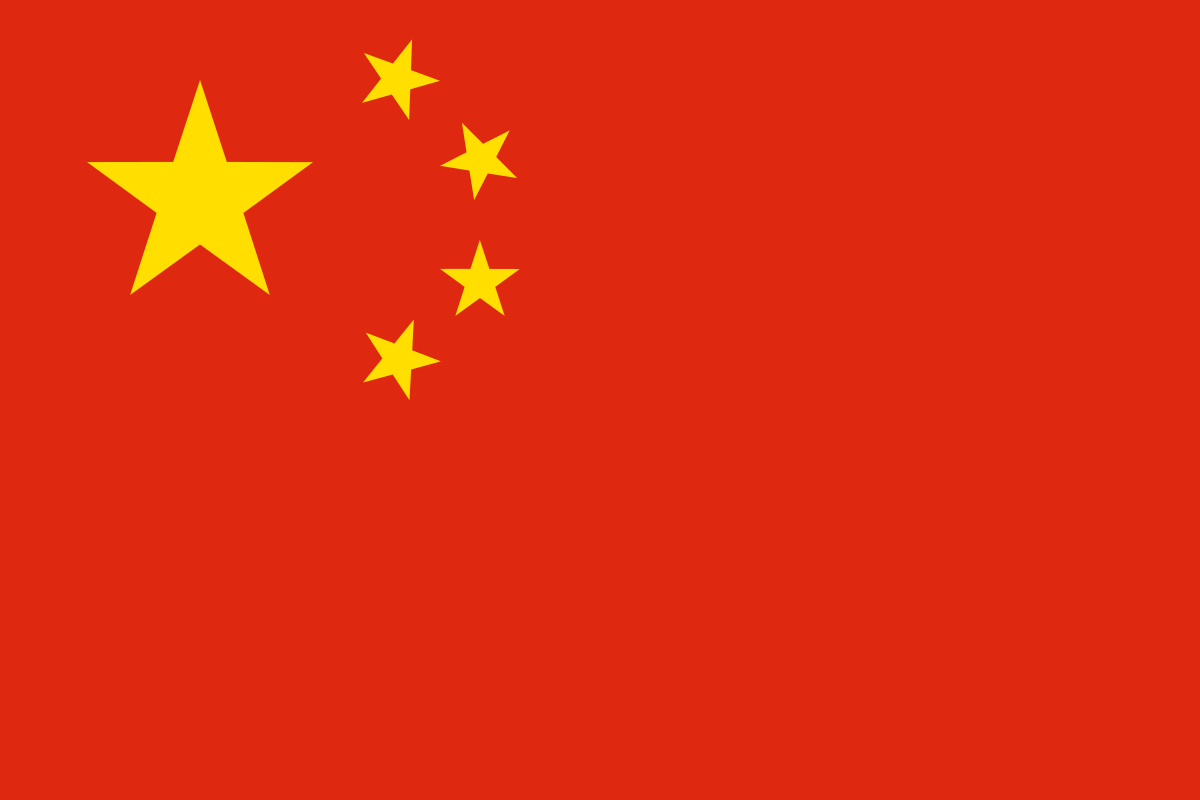
Republic Executive Presidency is independent of legislature  People's Republic of China
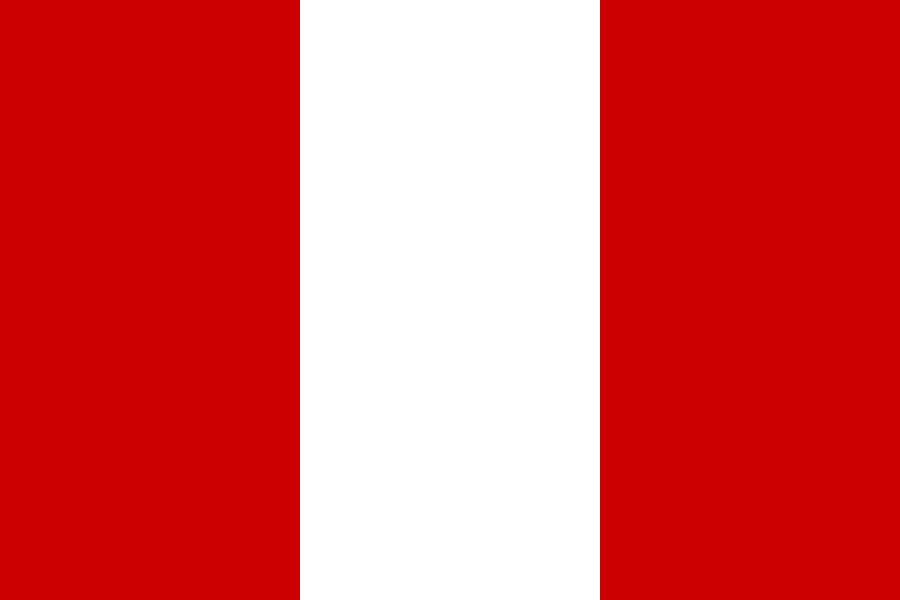
Republic Executive Power constitutionally linked to a single political movement  Peru
PeruRepublic Executive Presidency is independent of legislature  Philippines
Republic Executive Presidency is independent of legislature  Poland
Republic Ceremonial Ministry is subject to parliamentary confidence  Portugal
Republic Executive Presidency independent of legislature; ministry subject to parliamentary confidence  Qatar
QatarAbsolute monarchy Executive All authority vested in absolute monarch  Republic of the Congo
Republic Executive Presidency is independent of legislature  Romania
Republic Executive Presidency independent of legislature; ministry subject to parliamentary confidence  Russia
Republic Executive Presidency independent of legislature; ministry subject to parliamentary confidence  Rwanda
Republic Executive Presidency is independent of legislature  Sahrawi Republic
Republic Executive Power constitutionally linked to a single political movement  Saint Kitts and Nevis
Constitutional monarchy Ceremonial Ministry is subject to parliamentary confidence  Saint Lucia
Constitutional monarchy Ceremonial Ministry is subject to parliamentary confidence  Saint Vincent and the Grenadines
Constitutional monarchy Ceremonial Ministry is subject to parliamentary confidence  Samoa
SamoaRepublic Ceremonial Ministry is subject to parliamentary confidence  San Marino
Republic Ceremonial Ministry is subject to parliamentary confidence  São Tomé and Príncipe
Republic Executive Presidency independent of legislature; ministry subject to parliamentary confidence  Saudi Arabia
Absolute monarchy Executive All authority vested in absolute monarch  Senegal
Republic Executive Presidency independent of legislature; ministry subject to parliamentary confidence  Serbia
Republic Ceremonial Ministry is subject to parliamentary confidence  Seychelles
Republic Executive Presidency is independent of legislature  Sierra Leone
Republic Executive Presidency is independent of legislature  Singapore
Republic Ceremonial Ministry is subject to parliamentary confidence  Slovakia
Republic Ceremonial Ministry is subject to parliamentary confidence  Slovenia
Republic Ceremonial Ministry is subject to parliamentary confidence  Solomon Islands
Constitutional monarchy Ceremonial Ministry is subject to parliamentary confidence  Somalia
Republic Executive Presidency independent of legislature; ministry subject to parliamentary confidence Stateless society  South Africa
Republic Executive Presidency and ministry are subject to parliamentary confidence  South Korea
Republic Executive Presidency is independent of legislature  South Sudan
Republic Executive Presidency is independent of legislature  Spain
SpainConstitutional monarchy Ceremonial Ministry is subject to parliamentary confidence  Sri Lanka
Republic Executive Presidency independent of legislature; ministry subject to parliamentary confidence  Sudan
SudanRepublic Executive Presidency is independent of legislature  Suriname
Republic Executive Presidency is independent of legislature  Swaziland
Absolute monarchy Executive All authority vested in absolute monarch  Sweden
Constitutional monarchy Ceremonial Ministry is subject to parliamentary confidence  Switzerland
Republic Executive Presidency is independent of legislature  Syria
SyriaRepublic Executive Power constitutionally linked to a single political movement  Republic of China (Taiwan)
Republic Executive Presidency independent of legislature; ministry subject to parliamentary confidence  Tajikistan
Republic Executive Presidency independent of legislature; ministry subject to parliamentary confidence  Tanzania
Republic Executive Presidency is independent of legislature  Thailand
Constitutional monarchy Ceremonial Ministry is subject to parliamentary confidence  Togo
TogoRepublic Executive Presidency is independent of legislature  Tonga
TongaConstitutional monarchy Executive Monarch personally exercises power in concert with other institutions  Trinidad and Tobago
Republic Ceremonial Ministry is subject to parliamentary confidence  Tunisia
Republic Executive Presidency is independent of legislature  Turkey
Republic Ceremonial Ministry is subject to parliamentary confidence  Turkmenistan
Republic Executive Power constitutionally linked to a single political movement  Tuvalu
Constitutional monarchy Ceremonial Ministry is subject to parliamentary confidence  Uganda
Republic Executive Presidency is independent of legislature  Ukraine
Republic Executive Presidency is independent of legislature  United Arab Emirates
Constitutional monarchy Executive Monarch personally exercises power in concert with other institutions  United Kingdom
Constitutional monarchy Ceremonial Ministry is subject to parliamentary confidence  United States
Republic Executive Presidency is independent of legislature  Uruguay
Republic Executive Presidency is independent of legislature  Uzbekistan
Republic Executive Presidency is independent of legislature  Vanuatu
Republic Ceremonial Ministry is subject to parliamentary confidence  Vatican City
Absolute monarchy Executive All authority vested in absolute monarch  Venezuela
Republic Executive Presidency is independent of legislature  Vietnam
Republic Executive Power constitutionally linked to a single political movement  Yemen
YemenRepublic Executive Presidency is independent of legislature  Zambia
Republic Executive Presidency is independent of legislature  Zimbabwe
Republic Executive Presidency independent of legislature; ministry subject to parliamentary confidence Map
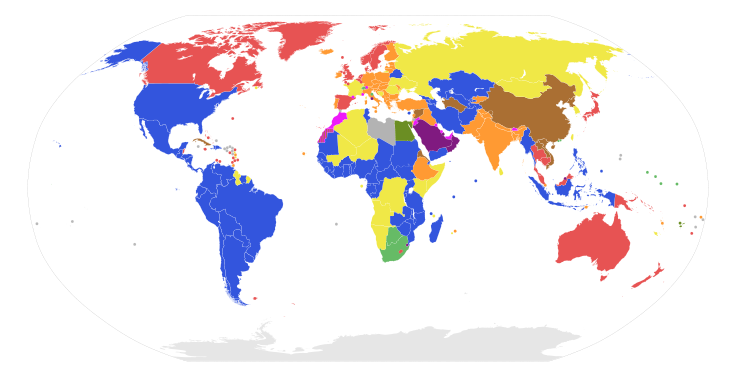
Legend
- orange - parliamentary republics
- green - presidential republics, executive presidency linked to a parliament
- yellow - presidential republics, semi-presidential system
- blue - presidential republics full presidential system
- red - parliamentary constitutional monarchies in which the monarch does not personally exercise power
- magenta - constitutional monarchies in which the monarch personally exercises power, often (but not always) alongside a weak parliament
- purple - absolute monarchies
- brown - republics where the dominant role of a single party is codified in the constitution
- dark green - countries that constitutional provisions for government have been suspended
- gray - countries that does not fit in any of the above listed systems
Note that this chart aims to represent de jure systems of government, not the de facto degree of democracy. Several states constitutionally deemed to be multiparty republics may also be broadly described as authoritarian states.
Systems of Governance
Presidential/Separated republics
These are systems in which a president is the active head of the executive branch of government and is elected and remains in office independently of the legislature. The following list includes democratic and non-democratic states:
Full presidential systems
In full presidential systems, the president is both head of state and head of government. There is generally no prime minister, although if one exists he or she serves purely at the pleasure of the president.
Presidential systems without a prime minister
- Afghanistan
- Angola
- Argentina
- Benin
- Bolivia
- Brazil
- Burundi
- Chile
- Colombia
- Comoros
- Costa Rica
- Cyprus
- Dominican Republic
- Ecuador
- El Salvador
- Gambia
- Ghana
- Guatemala
- Honduras
- Indonesia
- Iran[1] (to some degree)
- Kiribati
- Liberia
- Malawi
- Maldives
- Mexico
- Myanmar
- Nicaragua
- Nigeria
- Palau
- Panama
- Paraguay
- Philippines
- Rwanda
- Seychelles
- Sierra Leone
- South Sudan
- Sudan
- Suriname
- United States
- Uruguay
- Venezuela
- Zambia
Presidential systems with a prime minister
- Armenia
- Azerbaijan
- Belarus
- Cameroon
- Central African Republic
- Chad
- Guinea (Guinea-Conakry)
- Equatorial Guinea
- Gabon
- Kazakhstan
- Mauritania
- Mozambique
- Namibia
- Peru
- Republic of the Congo (Congo-Brazzaville)
- South Korea
- Sri Lanka[2]
- Tanzania
- Togo
- Tunisia
- Uganda
- Ukraine
- Uzbekistan
- Yemen
Semi-presidential systems
In semi-presidential systems, there is usually both a president and a prime minister. In such systems, the president has genuine executive authority, unlike in a parliamentary republic, but some of the role of a head of government is exercised by the prime minister.
- Algeria
- Burkina Faso
- Côte d'Ivoire (Ivory Coast)
- Democratic Republic of the Congo (Congo-Kinshasa)
- Djibouti
- France
- Georgia
- Guinea-Bissau
- Guyana
- Haiti
- Kenya
- Kyrgyzstan
- Lithuania
- Madagascar
- Mali
- Mongolia
- Niger
- Palestine
- Portugal
- Russia
- Romania
- São Tomé and Príncipe
- Senegal
- Somalia
- Republic of China (Taiwan)
- Tajikistan
- Zimbabwe
Directorial systems
The directorial system is the collective version of the presidential system. In a directorial republic a council jointly exercises both presidential and governmental powers. The council is appointed by the parliament (and democratically elected at local level), but it is not subject to political confidence during its term which has a fixed duration.
Parliamentary republics
A parliamentary republic is a system in which a prime minister is the active head of the executive branch of government and also leader of the legislature. The president's degree of executive power may range from being reasonably significant (e.g. Pakistan) to little or none at all (e.g. Ireland). Where the president holds little executive power, his or her function is primarily that of a symbolic figurehead.
- Albania
- Austria
- Bangladesh[4]
- Bosnia and Herzegovina[5]
- Bulgaria
- Cape Verde
- Croatia
- Czech Republic
- Dominica
- East Timor (Timor-Leste)
- Estonia
- Ethiopia
- Finland[6]
- Germany
- Greece
- Hungary
- Iceland
- India
- Iraq
- Ireland
- Israel
- Italy
- Latvia
- Lebanon
- Macedonia
- Malta
- Mauritius
- Moldova
- Montenegro
- Nepal
- Pakistan
- Poland
- Samoa
- San Marino
- Serbia
- Singapore
- Slovakia
- Slovenia
- Trinidad and Tobago
- Turkey
- Vanuatu
Mixed republican systems
A combined head of state and government is elected by the legislature, however they are not subject to parliamentary confidence during their term (although their cabinet is).
Constitutional monarchies
These are systems in which the head of state is a constitutional monarch; the existence of their office and their ability to exercise their authority is established and restrained or held back by constitutional law.
Constitutional monarchies with ceremonial monarchs
Systems in which a prime minister is the active head of the executive branch of government. In some cases the prime minister is also leader of the legislature, in other cases the executive branch is clearly separated from legislature although the entire cabinet or individual ministers must step down in the case of a vote of no confidence.[8][9][dubious ] The head of state is a constitutional monarch who only exercises his or her powers with the consent of the government, the people or their representatives.
- Andorra[10]
- Antigua and Barbuda[11]
- Australia[11]
- Bahamas[11]
- Barbados[11]
- Belgium
- Belize[11]
- Cambodia
- Canada[11]
- Denmark
- Grenada[11]
- Jamaica[11]
- Japan
- Lesotho
- Luxembourg
- Malaysia
- Netherlands
- New Zealand[11]
- Norway
- Papua New Guinea[11]
- Saint Kitts and Nevis[11]
- Saint Lucia[11]
- Saint Vincent and the Grenadines[11]
- Solomon Islands[11]
- Spain
- Sweden
- Thailand
- Tuvalu[11]
- United Kingdom[11]
Constitutional monarchies with active monarchs
The prime minister is the nation's active executive but the monarch still has considerable political powers that can be used at their own discretion.
Absolute monarchies
Specifically, monarchies in which the monarch's exercise of power is unconstrained by any substantive constitutional law.
Theocracies
States based on a state religion where the head of state is selected by some form of religious hierarchy.
Single political movement states
States in which political power is by law concentrated within a single political party whose operations are largely fused with the government hierarchy (as opposed to states where the law establishes a multi-party system but this fusion is not achieved anyway through electoral fraud or simple inertia). However, some do have elected governments.
- Cuba (Communist Party) (list)
- Democratic People's Republic of Korea (North Korea)(Workers' Party) (list)
- Eritrea (presidential republic)
- Laos (People's Revolutionary Party) (list)
- People's Republic of China (Communist Party) (list)
- Sahrawi Republic (Polisario Front) (Politics of the Sahrawi Republic)
- Syria (Arab Socialist Ba'th Party) (list)
- Turkmenistan (Democratic Party) (list)
- Vietnam (Communist Party) (list)
Military junta states
The nation's military control the organs of government and all high-ranking political executives are also members of the military hierarchy.
Transitional
States which have a system of government which is in transition or turmoil and are classified with the current direction of change.
Systems of Internal Governance
Federal
States in which the federal government shares power with semi-independent regional governments. The central government may or may not be (in theory) a creation of the regional governments; prime examples are Switzerland and the United States.
- Argentina (23 provinces and one autonomous city)
- Australia (six states and three territories)
- Austria (nine states)
- Belgium (three regions and three linguistic communities)
- Bosnia and Herzegovina (Federation of Bosnia and Herzegovina, Republika Srpska and Brčko District)
- Brazil (26 states and the Brazilian Federal District)
- Canada (ten provinces and three territories)
- Comoros (Anjouan, Grande Comore, Mohéli)
- Ethiopia (nine regions and three chartered cities)
- Germany (16 states)
- India (28 states and seven union territories)
- Iraq (18 governorates and one one region (Iraqi Kurdistan))
- Malaysia (13 states and three federal territories)
- Mexico (31 states and one federal district (Mexico City))
- Federated States of Micronesia (Chuuk, Kosrae, Pohnpei and Yap)
- Nepal (14 zones)
- Nigeria (36 states and one federal territory (the Federal Capital Territory)
- Pakistan (4 provinces, 2 autonomous areas and 2 territories)
- Russia (46 oblasts, 21 republics, nine krais, four autonomous okrugs, two federal cities, one autonomous oblast)
- Saint Kitts and Nevis (two states)
- South Sudan (10 states)
- Sudan (15 states)
- Switzerland (26 cantons)
- United Arab Emirates (seven emirates)
- United States (50 states, one incorporated territory, and one federal district (District of Columbia))
- Venezuela (23 states, one capital district and one federal dependency)
Regionalised unitary
States in which the central government has delegated some of its powers to regional authorities.
- Indonesia (30 autonomous province, 4 special autonomous province)
- Italy (5 autonomous regions)
- Kingdom of the Netherlands (4 constituent countries)
- People's Republic of China (22 provinces, 5 autonomous regions, 4 municipalities, and 2 special administrative regions)
- Philippines (1 autonomous region subdivided into 5 provinces and 113 other provinces and independent cities grouped into 16 other non-autonomous regions)
- Spain (State divided in autonomous communities)
- Tanzania (21 mainland regions and
 Zanzibar)
 - Ukraine (24 oblasts, 2 special-status cities, and
 Crimea)
 - United Kingdom (3 devolved administrations)
Unitary states
Main article: Unitary stateConfederation
Main article: ConfederationEuropean Union
The exact political character of the European Union is widely debated, some arguing that it is sui generis (unique), but others arguing that it has features of a federation or a confederation. It has elements of intergovernmentalism, with the European Council acting as its collective "president", and also elements of supranationalism, with the European Commission acting as its executive and bureaucracy.[14] But it is not easily placed in any of the above categories.
Notes
- ^ a b Iran combines the forms of a presidential republic, with a president elected by universal suffrage; and a theocracy, with a Supreme Leader who is ultimately responsible for state policy, chosen by the elected Assembly of Experts. Candidates for both the Assembly of Experts and the presidency are vetted by the appointed Guardian Council.
- ^ While the office of prime minister exists, the president is both the head of state and government.
- ^ The President of Switzerland serves in a primus inter pares capacity amongst the Swiss Federal Council, the seven-member executive council which constitutes both the presidency and the government.
- ^ In Bangladesh, a caretaker government during parliamentary elections. The Caretaker government is headed by a Chief Adviser and a group of neutral, non-partisan advisers chosen from the civil society. During this time, the president has jurisdiction over the defence and foreign affairs ministries.
- ^ Collective presidency consisting of three members; one for each major ethnic group.
- ^ Formerly a semi-presidential republic, it's now a parliamentary republic according to David Arter, First Chair of Politics at Aberdeen University, who in his "Scandinavian Politics Today" (Manchester University Press, revised 2008), quotes Jaakko Nousiainen in "From semi-presidentialism to parliamentary government" in Scandinavian Political Studies 24 (2) p95-109 as follows: "There are hardly any grounds for the epithet 'semi-presidential'." Arter's own conclusions are only slightly more nuanced: "The adoption of a new constitution on 1 March 2000 meant that Finland was no longer a case of semi-presidential government other than in the minimalist sense of a situation where a popularly elected fixed-term president exists alongside a prime minister and cabinet who are responsible to parliament (Elgie 2004: 317)". According to the Finnish Constitution, the President has no possibility to rule the government without the ministerial approval, and substantially has not the power to disband the parliament under its own desire. Finland is actually represented by its Prime Minister, and not by its President, in the Council of the Heads of State and Government of the European Union.
- ^ a b Combines aspects of a presidential system with aspects of a parliamentary system. The president is elected by parliament and holds a parliamentary seat, much like a prime minister, but is immune from a vote of no confidence, unlike a prime minister.
- ^ Norwegian Parliament web page
- ^ CIA factbook on Norway
- ^ Bishop of Urgell and President of France serve as ex-officio co-princes who are have their interests known through a representative.
- ^ a b c d e f g h i j k l m n o p One of sixteen constitutional monarchies which recognize Elizabeth II as head of state, who presides over an independent government. She is titled separately in each country (e.g. Queen of Australia), and notionally appoints a Governor-General to each country other than the United Kingdom to act as her representative. The prime minister is the active head of the executive branch of government and also leader of the legislature. These countries may be known as "Commonwealth realms"
- ^ The UAE's constitution establishes the state as a federation of emirates, with the federal president drawn from hereditary emirs, but each emirate in turn functions as an absolute monarchy
- ^ a b The Vatican is an elective absolute monarchy and a Roman Catholic theocracy; its monarch, the Pope, is the head of the global Roman Catholic Church. His power within the Vatican City State is unlimited by any constitution, but all persons resident within the Vatican have consented to obey the Pope, either by virtue of being ordained Catholic clergy or members of the Swiss Guard.
- ^ For more detailed discussion, see John McCormick, European Union Politics (Palgrave Macmillan, 2011), Chapters 1 and 2.
See also
- List of forms of government
- List of countries
- List of countries by date of transition to republican system of government
External links
- Global Scan- Election Tracker
- Countries categorized by system of government in 20th century at Historical Atlas of 20th Century
- [1] A Chronology of political history based on Government form
- Political Chronology Chronological development of political history
Categories:- Lists of countries
- Government-related lists
































Wikimedia Foundation. 2010.
